Structured running programmes for all abilities. Preparation from 5K, 10K, Half Marathon to full Marathon, built entirely around your current fitness, background, and goals.
Unlock targeted pacing models, injury reduction strategies, and custom conditioning blocks built specifically for your next race milestone.
Learn how to structure intervals, tempo, and recovery runs to target new personal bests.
Avoid junk miles. Every run has a specific purpose (aerobic base, lactate threshold, or VO2 max conditioning).
Balance weekly mileage progression, running mechanics, and tailored strength routines to stay healthy.
Incorporate periodised blocks that expand cardiovascular base and build muscular power.
Real-time metrics analysis to customize target paces for every training zone.
Compare the training parameters, durations, and structures across our target running distances to find the right preparation block for your goals.
| Parameter | 5K / 10K Program | Half Marathon | Full Marathon |
|---|---|---|---|
| Target Level | Beginner to Intermediate | Intermediate to Advanced | All Experience Levels |
| Duration | 8 - 12 Weeks | 12 - 16 Weeks | 16 - 24 Weeks |
| Weekly Runs | 3 - 4 Sessions | 4 - 5 Sessions | 4 - 6 Sessions |
| Pacing Focus | Intervals & VO2 Max | Threshold & Tempo runs | Aerobic Capacity & Marathon Pace |
| Strength Integration | 1x Weekly Focus | 2x Weekly Focus | 2x Weekly Focus (Injury Prevention) |
| Support Level | Weekly check-ins | Bi-weekly review + message access | Unlimited messaging + weekly data audits |
Every runner is unique. We offer flexible programming structures and bespoke pricing tailored entirely to your target race and support needs.
Best for remote endurance athletes, 5K to marathon preparation, and shift-workers.
Best for local Basingstoke runners wanting face-to-face form correction and pacing drills.
Best for athletes combining structured running schedules with dedicated gym-based strength training.
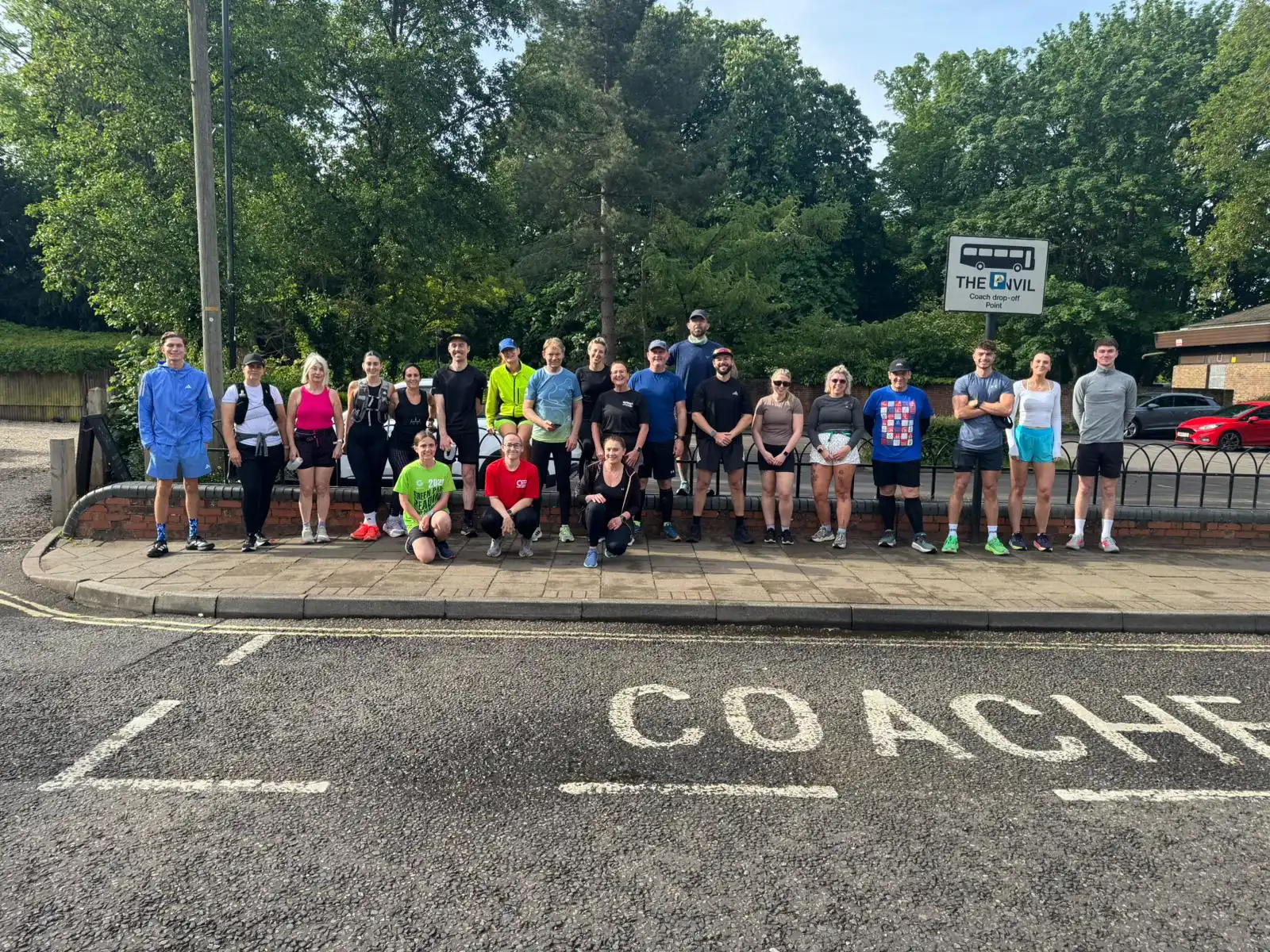
Running doesn't have to be a solo effort. The JDRC Sunday Social Run is a free community event in Basingstoke where runners of all levels meet for a social loop and post-run coffee. Join a supportive network of local runners to stay motivated.
Perfect for beginners who want a friendly introduction to running, as well as experienced runners looking for a relaxed recovery pace run in Basingstoke.
Free & Open to All Ability Levels
Starts 8:30am
starting and finishing at The Coffee Barn 2, Churchill Way E, Basingstoke RG21 7QU
JDRC Sunday Social Run (Starts 8:30am, starting and finishing at The Coffee Barn 2, Churchill Way E, Basingstoke RG21 7QU).
We leverage Basingstoke's best training locations—including Down Grange track for speed intervals, local parks for tempo sessions, and scenic trail routes for long runs—ensuring your training environment matches your goal race terrain.
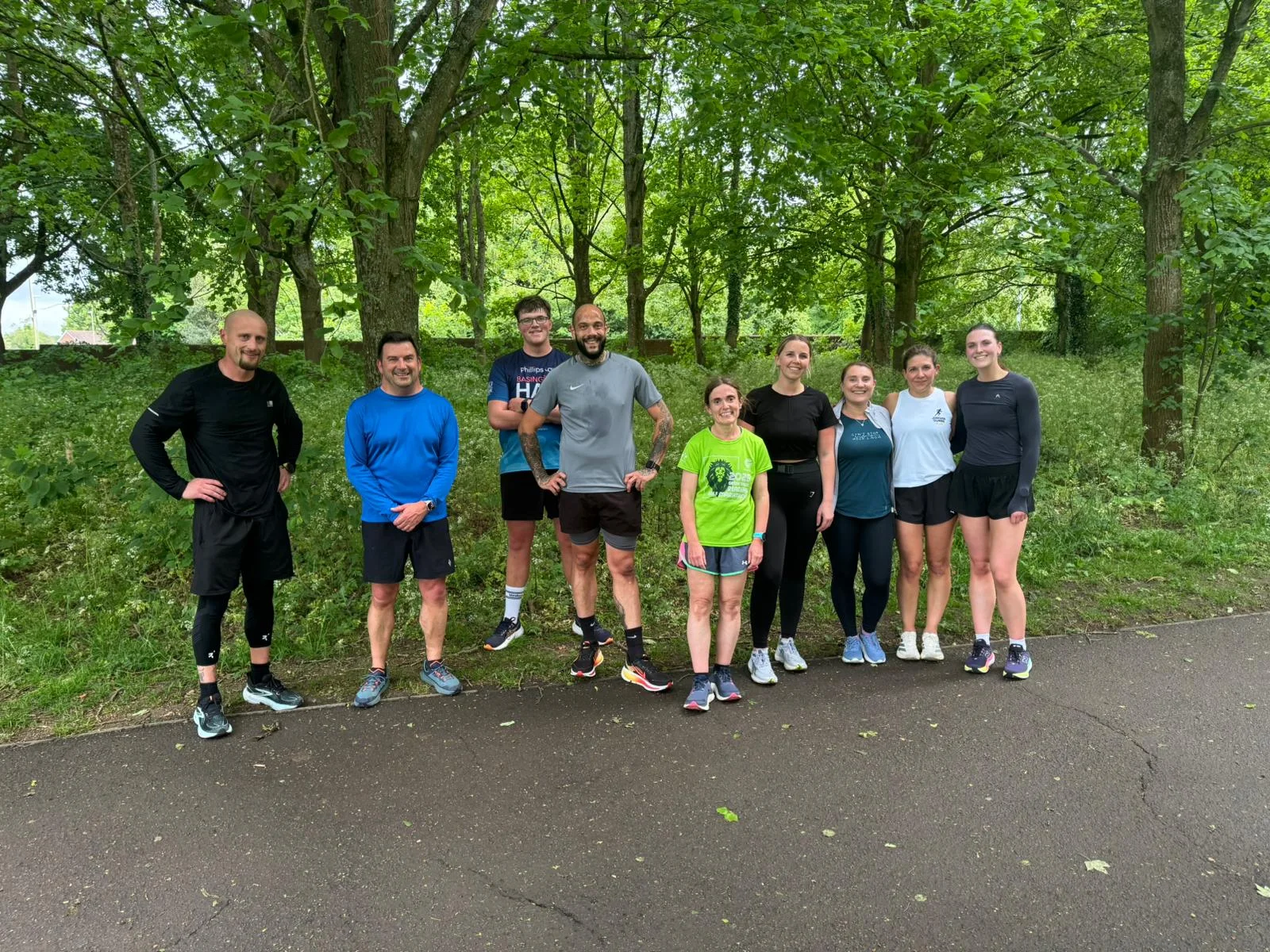
Track record of personal bests and race achievements. From first-time 5K finishers to sub-3 hour marathoners, structured pacing and endurance coaching yields real results.
Custom preparation blocks targeting new records across 5K, 10K, and Half Marathon.
Structured build-ups taking complete beginners to their very first finish lines.
Safe running mileage progressions, building durability without injury.
Mastery of breathing patterns, pacing control, and race-day mental toughness.
"ONE MASSIVE YES! It will change your life! Anyone that is reading this, I 100% wholeheartedly think it’s worth doing!"
"As a complete beginner, I was terrified of injury. Jordan built my mileage slowly, and I finished my first 5K without walking once!"
"The pacing strategy and trail suggestions made all the difference. I set a new Half Marathon PR on a tough, hilly course."
Real client visual results and performance gains built through structured endurance and strength phases.
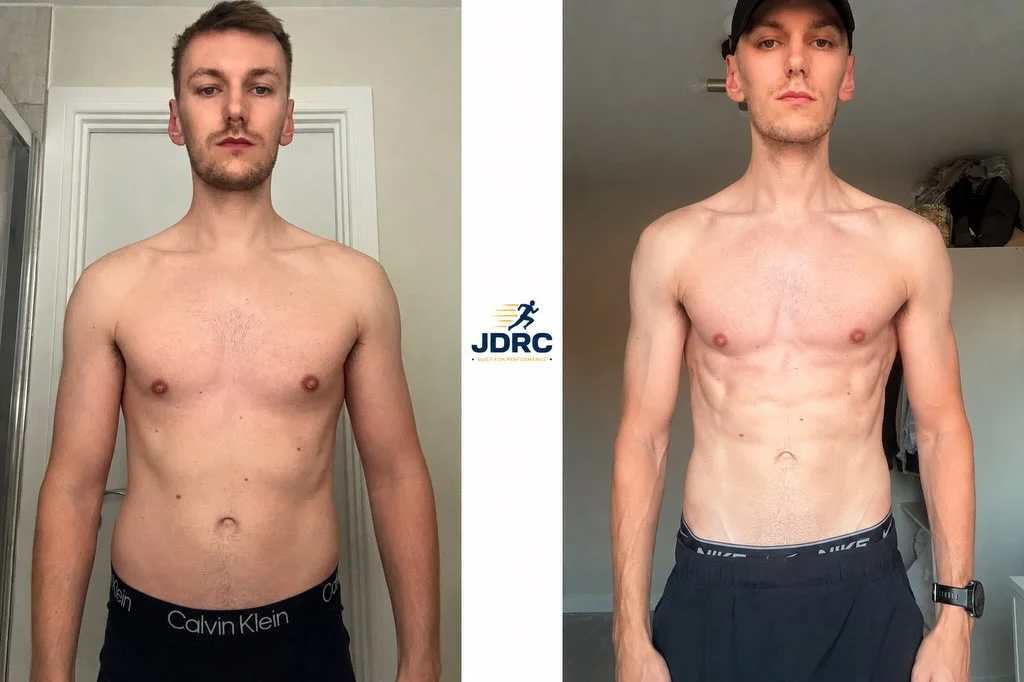
3-Phase Endurance & Strength Build
When Cameron came to me 12 weeks ago, the goal wasn’t to get as lean as possible.
The goal was to build a stronger, more durable and more efficient runner who could perform at his best over the half marathon.
Over the last 12 weeks we worked through three structured phases of training. We built strength first, then progressed the running volume and intensity, before bringing everything together in the final block to prepare for race day.
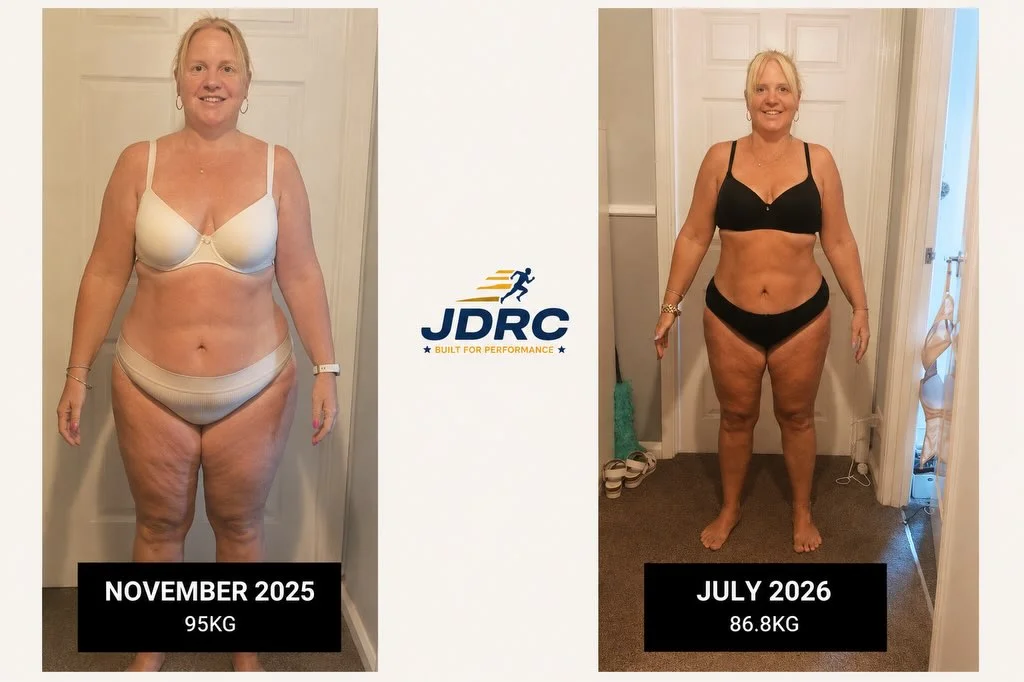
Mindset, Food & Training Shift
There are so many reasons I’m proud of Lisa, and none of them are just because the scales say she’s 8.2kg lighter.
Over the last eight months she’s completely changed her relationship with training, food and, most importantly, herself.
Before going on holiday she said something to me that really stuck:
“I wouldn’t have worn this outfit five months ago.”
Strength, Resilience & Running Economy
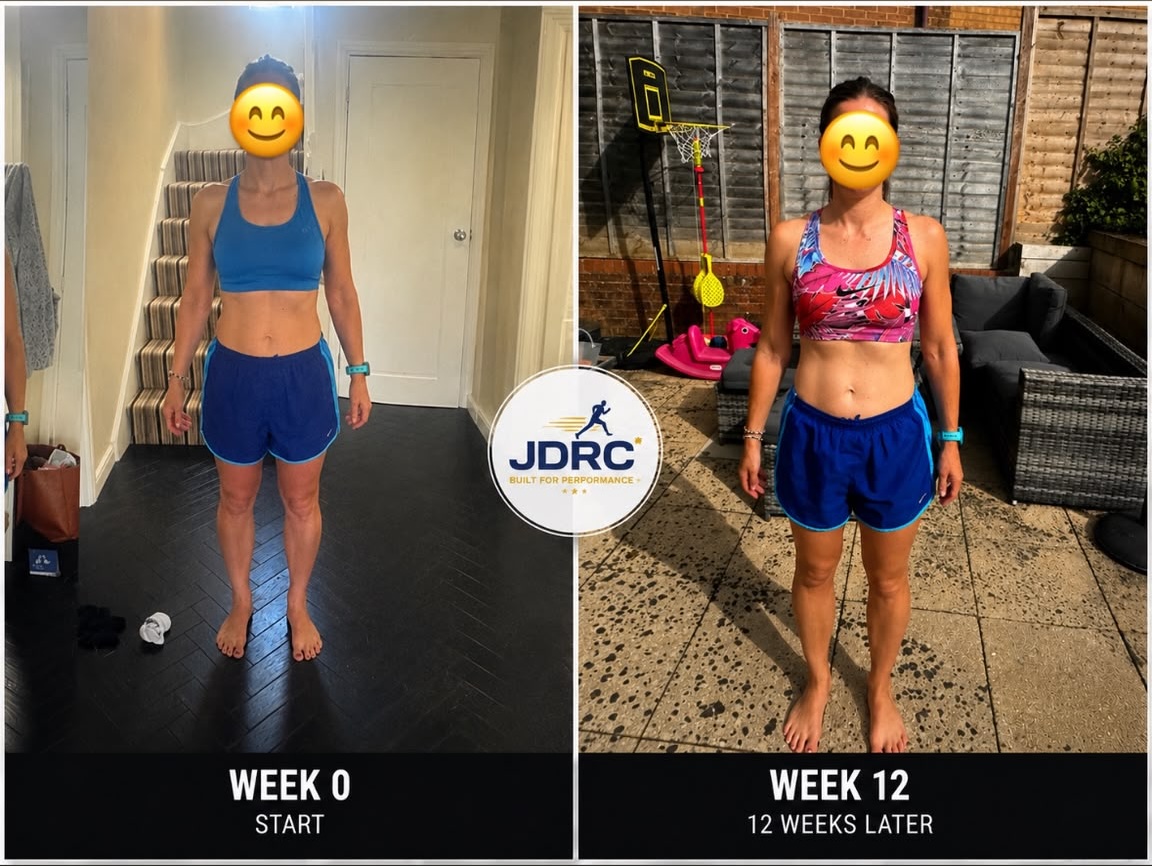
12 weeks. More than just a physical transformation. When Jo came to me, the goal wasn’t simply to lose weight.
The aim was to become a stronger, more robust athlete. We wanted to improve her strength in the gym, build resilience, support her running and help her enjoy it even more, all while reducing the risk of injury.
Over the first four weeks, we built the foundations with consistent strength training, better movement quality and a strong aerobic base. The next four weeks focused on progressing her strength, improving her running economy and gradually introducing more race specific sessions.
The final four weeks were about bringing everything together, sharpening her running, managing recovery and making sure Jo arrived at race day ready to perform.
“The results speak for themselves.”
54.5kg → 51.1kg
London Marathon Performance & Body Composition
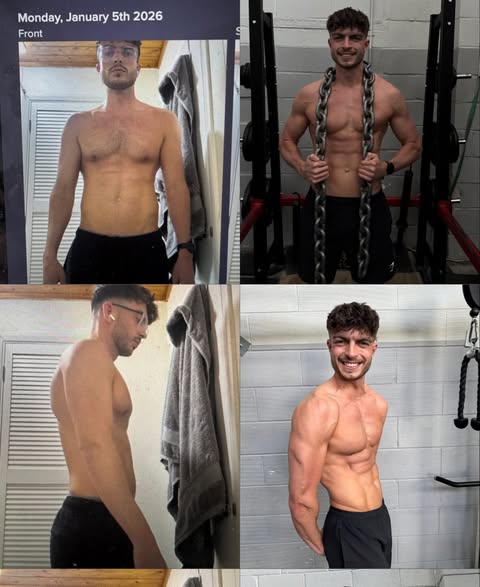
Since 5th January, Richard’s goal has always been London Marathon performance first.
No crash diet. No obsession with the scales. No trying to get shredded at the expense of training. The target was to become a stronger runner, fitter individual, and arrive on the start line ready to perform.
He started around 76.6kg and is sitting around 75.5kg, but body composition changed dramatically: leaner through the waist, clear abdominal definition, bigger shoulders and arms, stronger chest, and serious back development.
Four runs per week. Three gym sessions per week. Smart marathon programming with recovery and sleep prioritised.
“When performance is the priority, aesthetics follow as a byproduct.”
76.6kg → 75.5kg
Yes, absolutely. We welcome all levels. Programs start with run-walk progressions to safely build your aerobic base and running mechanics from scratch.
Usually 3–5 runs per week depending on your current fitness, schedule, and goal distance. Beginners start with 3 runs, while marathoners range from 4–6.
A GPS watch (like Garmin, COROS, or Apple Watch) is highly recommended for tracking pace, distance, and heart rate, but a smartphone with Strava works too.
Yes. All plans are fully customized and can be adjusted around shift work, travel, or busy family routines to ensure you stay consistent.
Apply for a consultation to review your current weekly running mileage, target race, and discuss in-person or online coaching setups.